














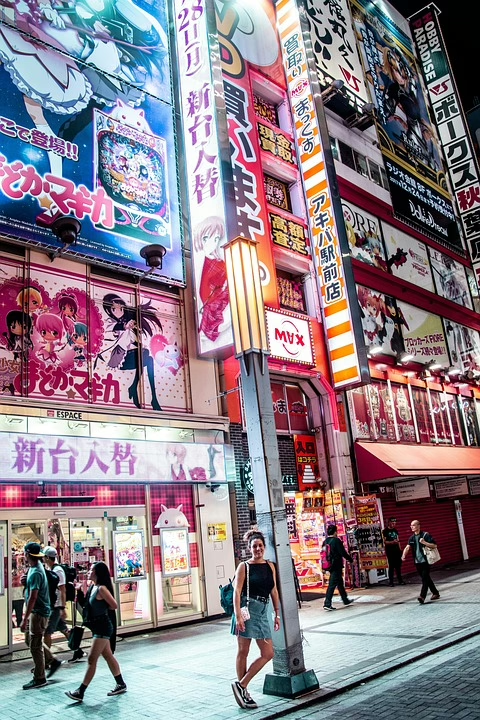

Underground Rhythms: Exploring the Heartbeat of Nightlife
The Pulse of the City: An Overview of Underground Nightlife
Underground nightlife has long been synonymous with rebellion and innovation. From secretive speakeasies in the Prohibition era to clandestine raves in abandoned warehouses, the underground scene serves as a breeding ground for new musical genres, artistic expression, and cultural movements. For many, it represents not just a place to escape the mundane but a vibrant tapestry of experiences that challenges societal norms and celebrates authenticity. Here, we will explore the rich history, diverse landscapes, and cultural significance of underground nightlife in various cities around the globe, emphasizing its role as a crucial engine for social and artistic innovation[1].
As we delve into this electrifying world, we’ll uncover the various forms it takes—be it in the form of intimate DJ sets, artistic installations, or immersive theater experiences. While nightlife manifests differently across cultures and locations, the common thread that ties these experiences is an elusive yet powerful rhythm that pulses through the air, inviting participants to lose themselves in its beats. This exploration will also highlight how underground scenes foster community, often becoming sanctuaries for marginalized voices and subcultures.
The Historical Context: How Underground Nightlife Evolved
The evolution of underground nightlife can be traced back through the annals of history, emerging from various socio-political climates and cultural contexts. In the early 20th century, venues that broke societal norms blossomed in response to Prohibition laws, leading to the birth of jazz clubs and speakeasies. Figures like Louis Armstrong and Duke Ellington became not just entertainers but icons of resistance, giving rise to what many consider the heart of American nightlife.
As societal constraints continued to emerge, the scene evolved through the beat generation of the 1950s and the counterculture movement of the 1960s, wherein underground venues became rehearsal spaces for revolutionary ideals. The underground punk scene in the late 1970s and 1980s further enriched this narrative, giving rise to bands like The Ramones and the Sex Pistols, whose music provided both a soundtrack and a manifesto for rebellion against societal norms.
The underground house and techno boom of the late 1980s, characterized by legendary parties in the Chicago warehouse scene and the Berlin Love Parade, marked yet another pivotal moment. These events transcended mere entertainment; they were cultural complexes, creating new social dynamics and communal spaces for acceptance and creativity. As the landscape of nightlife unfolded, a consistent theme emerged: the underground serves as a counter-narrative, pushing back against the mainstream and offering a sanctuary for those who seek freedom of expression.
The Soundtrack of Revolution: Music in Underground Nightlife
Music is the lifeblood of any underground scene, serving as both a catalyst for change and a medium for expression. From the heavy beats of techno to the gritty strumming of punk rock, each genre tells a story that resonates with different communities. The choice of music often reflects the collective psyche of a city, acting as a barometer for social tensions and cultural happenings.
For instance, the rise of house music in Chicago during the 1980s was not merely about dance; it was symptomatic of a city navigating through economic turmoil and cultural shifts. Artists like Frankie Knuckles and Derrick Carter introduced a sound that was both liberating and unifying, drawing diverse crowds together onto the dance floor. The same can be said for the rich underground hip-hop scene in New York, which emerged as a response to socio-economic disparities and has continued to inspire generations of artists and fans alike.
In the modern context, underground music is often seen as a radical act of defiance against commodification. Many underground artists choose to remain independent, focusing on authenticity over commercial success. SoundCloud, Bandcamp, and various DIY label platforms have democratized music distribution, allowing underground voices to flourish. This ethos of independence and authenticity creates a unique environment in which expression is valued over profitability, further solidifying the underground’s role as a heartbeat of nightlife.
Hidden Spaces: The Architecture of Underground Venues
The physical spaces that host underground nightlife play an equally vital role in shaping the experiences of those who enter. From hidden basements and rooftops to converted warehouses and art galleries, these venues often possess intricate histories and unique aesthetics. The architecture of these spaces is as varied as the music that fills them, creating atmospheres that allow patrons to escape reality and immerse themselves in an alternate universe.
Consider the iconic Berghain in Berlin, famous not only for its techno beats but also for its imposing structure housed in a former power plant. The stark industrial aesthetics complement the raw intensity of the music, creating an environment where patrons can lose themselves in a hedonistic experience that feels both liberating and profoundly intimate. Similarly, the storied history of New York’s CBGB speaks to the transformative power of environment; its humble walls bore witness to the rise of punk rock, making it a sacred space for both performers and fans.
In many cases, these venues also function as community spaces, serving as informal hubs for artists, activists, and visionaries to converge. The creative use of unexpected spaces has led to innovative collaborations and artistic endeavors that enrich the local cultural landscape. Time and again, we witness how the architecture of underground venues undergoes transformation, mirroring the ever-changing rhythms of the communities that inhabit them.
The Community Aspect: Building Connections Through Nightlife
One of the most profound aspects of underground nightlife is its ability to cultivate community. In a social landscape often marred by division and alienation, these venues provide safe spaces for marginalized voices to express themselves freely. As people come together on the dance floor or in intimate settings, they form connections that transcend traditional social barriers.
The communal nature of underground nightlife encourages dialogue and interaction, often leading to collaborations among artists, activists, and patrons. Movements such as Black Lives Matter and LGBTQ+ rights have found resonance within the underground scene, utilizing music and art as vehicles for social change. Events organized around these themes create not only awareness but also invite diverse community members to partake in collective action.
Moreover, many underground spaces adopt an ethos of inclusivity, emphasizing the importance of mutual respect and understanding. Initiatives such as “Safe Spaces” and “Radical Inclusion” serve to bolster a sense of belonging and acceptance, allowing individuals to come as they are. This communal spirit aids in the formation of lasting relationships and networks, contributing not only to personal growth but also to the cultural and social fabric of cities.
The Digital Pulse: Social Media and the Future of Underground Nightlife
The rise of social media and digital platforms has significantly impacted the underground nightlife scene, both positively and negatively. On one hand, platforms like Instagram, TikTok, and Facebook allow artists, promoters, and venues to reach a broader audience, paving the way for collaboration and innovation. On the other hand, the specter of commercialization looms large, threatening to dilute the authenticity that makes underground scenes so magnetic.
Promoters can now utilize social media to foster communities, share upcoming events, and create buzz around underground artists, enabling a rich exchange of ideas and creativity. However, as events gain traction and visibility, they often attract corporate sponsors, leading to a clash between artistic integrity and commercial interests. This tension raises questions about the sustainability of underground scenes—can they remain authentic in the face of growing popularity and commodification?
The advent of virtual events, particularly during the COVID-19 pandemic, created new opportunities for underground artists to connect with audiences globally. Digital raves and live-streamed performances became the norm, showcasing the fluid nature of underground nightlife and its resilience. As the world resumes in-person gatherings, the fusion of digital and physical experiences may very well define the next phase of underground nightlife.
Conclusion: The Enduring Spirit of Underground Nightlife
Underground nightlife remains an ever-evolving entity, rich with history, culture, and community. As we’ve explored, it serves as a vital counter-narrative to the mainstream, a sanctuary for expression, and a breeding ground for social and artistic innovation. From its historical roots to its current manifestations, the vibrant tapestry of underground scenes across the globe reveals a heartbeat that is both pulsing and persistent.
In navigating the complexities of contemporary society, underground nightlife continues to challenge, inspire, and unite diverse voices. It remains a space where individuality flourishes, safe spaces are created, and community connections are forged. As we move forward, it is essential to recognize and support these cultural hubs, ensuring they retain their authenticity and heartbeat in a fast-changing world. The rhythms of underground nightlife will undoubtedly continue to resonate, serving as a vital outlet for creativity, expression, and social change[2].
Footnotes:
- Historical perspectives shaped by significant musical movements impact cultural landscapes.
- Community connections foster collective action within the underground nightlife.








Add Comment