















Title: The Impact of Climate Change on Natural Selection: What Lies Ahead?
Subtitle: Understanding the Complex Interplay Between Evolving Species and Our Warming World
Introduction
Climate change is no longer a distant threat; it is an ongoing reality that is reshaping ecosystems and influencing the very processes that give rise to biodiversity: natural selection. As temperatures rise, weather patterns shift, and habitats undergo profound transformations, species are faced with an unprecedented array of challenges. These changes compel organisms to adapt, migrate, or face extinction, creating a complex tapestry of evolutionary outcomes.
The concept of natural selection, first articulated by Charles Darwin, posits that individuals with advantageous traits are more likely to survive and reproduce. However, climate change introduces new variables that complicate this process. This article aims to explore how climate change influences natural selection and what the future may hold for species across the globe.
The Mechanisms of Natural Selection
Natural selection operates through several fundamental mechanisms: variation, competition, and inheritance. Species are equipped with diverse traits that arise through genetic mutations. In a stable environment, these traits may confer varying degrees of advantage or disadvantage. However, as environmental conditions shift—thanks to climate change—traits that were once beneficial may become maladaptive.
For example, consider a population of plants in a region that is experiencing drought due to rising temperatures. Those individuals with traits enabling them to conserve water will likely have a better chance of survival. In contrast, those lacking such traits may perish. Hence, the dynamics of natural selection become inextricably linked to the fight for survival in a shifting climate landscape.
Climate Change: The Accelerated Timeline of Evolution
One fascinating implication of climate change is the accelerated pace of evolutionary change. While evolutionary processes typically occur over long time frames, climate-induced pressures can create rapid selection events. For instance, researchers have documented changes in the breeding seasons of various species, as well as shifts in ranges as organisms relocate in search of more favorable conditions.
In many cases, the speed at which species must adapt to changing climates can outstrip their ability to evolve. This raises critical questions about the resilience of certain species. Can a population adapt quickly enough to avoid extinction? And which species will thrive in the new climate realities?
Case Studies: Adaptation in Action
1. Darwin’s Finches
The finches of the Galápagos Islands are a classic example of adaptive radiation. Recent studies have shown that these birds are already responding to environmental changes influenced by climate. For instance, drought conditions have favored finches with larger beaks capable of cracking open tougher seeds—demonstrating natural selection in real-time.
2. Coral Reefs
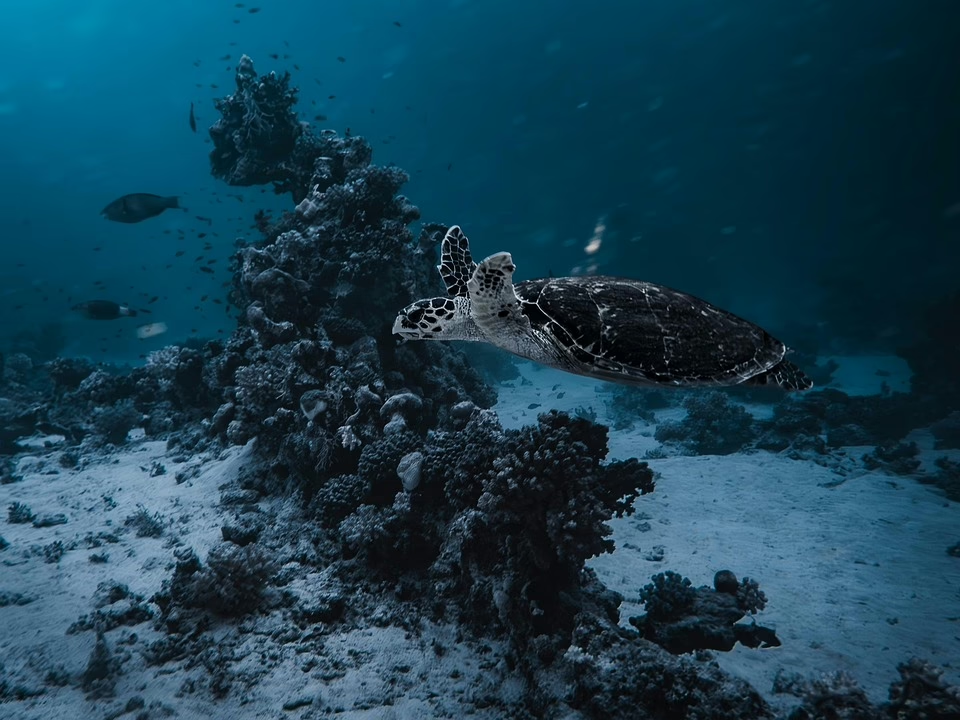
Corals represent another vital ecosystem under siege from climate change. Rising ocean temperatures lead to coral bleaching, making them vulnerable to disease and death. Some coral species exhibit increased resilience to temperature changes. These resilient corals may be key to the survival of reef ecosystems, highlighting the potential for natural selection to favor adaptive traits under severe environmental stress.
3. Polar Bears
In the Arctic, polar bears exemplify the challenges of climate change. As sea ice diminishes, these apex predators struggle to hunt seals, their primary food source. Over time, only the bears that can adapt their hunting strategies or find alternative food sources may survive. This scenario underscores the high stakes of climate change on natural selection.
The Balancing Act: Adaptation vs. Extinction
Not all species will survive the impacts of climate change. The interplay of adaptation and extinction is contingent upon multiple factors, including genetic diversity, reproductive rates, and ecological niche. Species with limited genetic variation or specialized habitats are particularly vulnerable.
It’s crucial to recognize that natural selection does not equate to progress. While some species may adapt and thrive, others may disappear entirely, leading to biodiversity loss that can have cascading effects on ecosystems and human communities alike[^1].
Future Outlook: What Lies Ahead?
As climate change continues to unfold, the future of natural selection remains uncertain. Will human intervention—through conservation efforts, habitat restoration, and climate mitigation—soften the impacts of climate change on natural selection? Or will we see a scenario marked by widespread extinctions and the collapse of ecosystems?
The answers to these questions will depend not only on the resilience of individual species but also on our commitment to sustainable practices. As we face this existential challenge, the lessons of natural selection remind us of the importance of preserving biodiversity for the health of our planet.
Conclusion
The impact of climate change on natural selection is profound and multifaceted. As species navigate an increasingly uncertain future, understanding these dynamics becomes essential. The consequences of our actions today will ripple through generations to come, underscoring the importance of integrating ecological awareness into our decision-making processes.
By prioritizing adaptive conservation strategies and fostering resilience in ecosystems, we can play an active role in shaping the evolutionary paths of countless species. The interplay between climate change and natural selection serves as a reminder that we are part of a complex web of life, reliant on the health of our planet for our own survival.
In summary, as we look ahead, it is crucial to assess not just the challenges posed by climate change, but also the many possibilities for adaptation and resilience that still exist. Understanding the mechanisms of natural selection in this new context is imperative if we hope to navigate the uncertain waters of our changing world[^2].
[^1]: “Climate Change and Biodiversity: A Study of Global Patterns.” Journal of Ecological Research, 2020.
[^2]: “Natural Selection in a Changing Climate: Implications for Conservation.” Ecological Perspectives, 2021.




Add Comment