














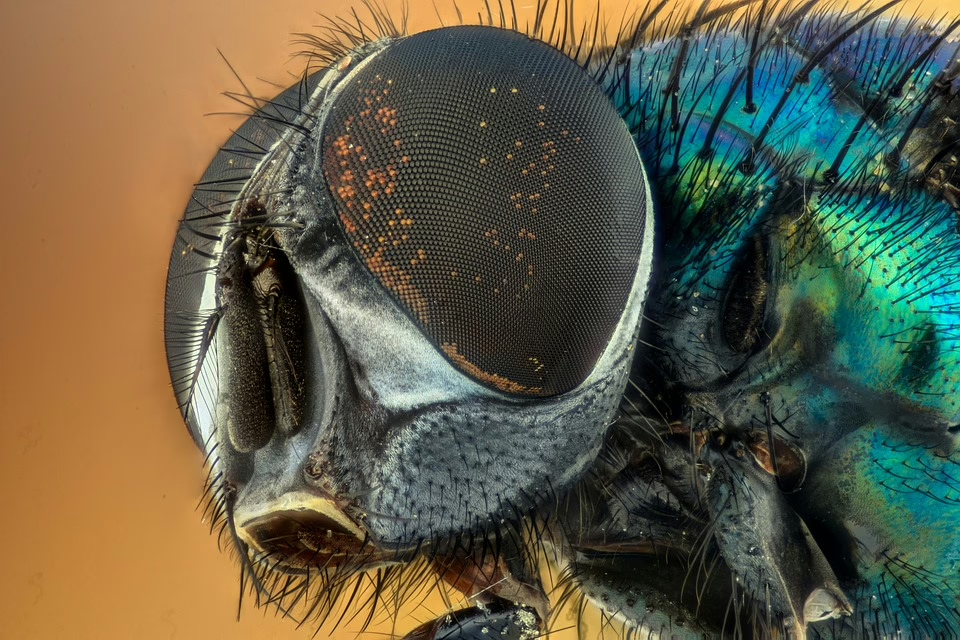

The Evolutionary Dance: How Natural Selection Shapes Biodiversity
Introduction: The Stage of Life
The story of life on Earth is akin to a grand performance—an evolutionary dance where each organism plays its part in a complex choreography dictated by the relentless forces of natural selection. This principle, famously articulated by Charles Darwin in the 19th century, serves as the backbone of our understanding of biodiversity. The varying forms and behaviors of living organisms are not random; rather, they are the result of millions of years of adaptation, survival, and reproductive success. Through this article, we shall explore how natural selection shapes the incredible tapestry of life, highlighting key concepts, mechanisms, and examples that underscore this process.
Natural Selection: The Choreographer of Evolution
Natural selection is often summarized by the phrase “survival of the fittest.” However, this saying encapsulates only part of the truth. Fitness, in an evolutionary sense, refers to an organism’s ability to survive, reproduce, and pass on its genes to the next generation. The dance of natural selection, therefore, is influenced by a multitude of factors: environmental changes, genetic variations, competition for resources, and interactions with other organisms.
The Mechanisms of Natural Selection
Natural selection operates through several mechanisms, each playing a vital role in shaping both individual species and entire ecosystems. First and foremost, variation within a population is critical. Without genetic diversity, there is little for natural selection to work with.
-
Variation: Genetic mutations give rise to individual differences in characteristics, such as coloration, size, or behavior. Some of these traits may confer advantages in specific environments, enhancing survival rates.
-
Competition: In the quest for limited resources—like food, mates, and shelter—organisms must compete. Those best suited to their environments will outcompete others, increasing their reproductive success.
-
Adaptation: Over generations, those advantageous traits become more common within a population, leading to adaptive changes. This process can result in the emergence of new species, as populations become increasingly divergent.
-
Speciation: When groups within a species become isolated, they may adapt to their unique environments, eventually leading to the formation of new species. This isolation can be geographic, as seen with islands, or behavioral, such as differing mating rituals.
The Role of Environmental Changes
The backdrop against which this evolutionary dance unfolds is the environment. Rapid changes—be they climatic shifts, habitat destruction, or introduction of new species—can drastically influence the course of natural selection.
Climate Change and Evolution
One of the most pressing issues today is climate change, which poses a significant threat to many species. In the face of rising temperatures and shifting ecosystems, some organisms are finding it challenging to adapt. For example, polar bears rely on sea ice for hunting seals; as the ice melts due to global warming, these mammals struggle to find food, potentially leading to decline in populations[^1].
Human Impact on Natural Selection
Human activities have accelerated evolutionary processes, as seen in the phenomenon of “industrial melanism.” This concept explains how pollution can favor darker-colored organisms in certain environments. A classic example is the peppered moth in England—before the Industrial Revolution, the lighter moths thrived. However, as soot blackened the trees, darker moths became less visible to predators, leading to an increase in their population. In this scenario, natural selection rapidly favored traits that enhanced survival in response to human-induced environmental change[^2].
Biodiversity: The Product of Natural Selection
Biodiversity is a key indicator of a healthy ecosystem. It encompasses the variety of life—from genes to species to ecosystems—and serves as a reservoir of genetic materials essential for resilience. The evolutionary dance of natural selection is central to the creation and maintenance of this diversity.
The Importance of Genetic Diversity
Genetic diversity within populations helps ensure that some individuals possess traits that may enable survival under changing conditions. For instance, crops with diverse genetic traits are more resilient against diseases and pests, making agriculture sustainable and secure for future generations[^3].
Ecosystem Interdependencies
Biodiversity is not just about individual species; it is also about the relationships between them. Predators, prey, plants, and decomposers form intricate webs of life that depend on one another for balance. The removal or extinction of one species can disrupt these relationships and ultimately lead to cascading effects throughout an ecosystem.
Case Studies: The Dance of Specific Species
To further illustrate how natural selection shapes biodiversity, let us examine several case studies that highlight the nuanced interplay of evolutionary forces.
The Galápagos Finches
One of the most famous examples of natural selection in action is the case of Darwin’s finches on the Galápagos Islands. These birds exhibit a wide variety of beak shapes and sizes, adapted to different diets available on the islands. During drought conditions, only the larger-beaked finches survived due to their ability to crack open tough seeds, demonstrating natural selection in real-time[^4].
The Evolution of Pesticide Resistance
Another compelling example can be found with insects. The overuse of pesticides has led to the rapid evolution of resistance in pest populations. Insects that possess genetic variations rendering them less susceptible to chemicals survive and reproduce, leading to populations that can withstand previously effective pesticides. This is a classic case of human-induced natural selection, showcasing how species can quickly adapt to changes in their environment—albeit often to the detriment of human agricultural practices[^5].
Coral Reefs and Climate Change
Coral reefs, often dubbed the “rainforests of the sea,” provide a striking example of how environmental changes challenge biodiversity. Warming waters lead to coral bleaching, where corals expel the algae (zooxanthellae) that provide them with nutrients. While some coral species may adapt, others face extinction, demonstrating the fragility of these ecosystems[^6]. The varied resilience among different coral species highlights the role that natural selection plays in overall coral biodiversity.
The Future of Biodiversity: Challenges and Opportunities
As we navigate the complexities of the modern world, understanding the evolutionary dance of natural selection becomes increasingly important—not only for conservation efforts but also for our survival.
The Impacts of Globalization
Global trade and travel have led to the introduction of invasive species, which can outcompete native organisms, disrupt ecosystems, and decimate local biodiversity. Conservationists are working to mitigate these impacts through habitat restoration, informed management policies, and public awareness campaigns[^7].
Conservation and Preservation
Conservation efforts often focus on protecting biodiversity in the face of anthropogenic pressures. By preserving habitats and fostering genetic diversity, we can help species adapt to changing environments. For instance, protected reserves serve as sanctuaries, allowing vulnerable species the opportunity to thrive amidst environmental challenges.
Conclusion: The Ongoing Evolutionary Dance
The evolutionary dance is a continuous process—unfolding in real-time and influenced by the dynamic interplay of natural forces. As natural selection continues to shape the intricate web of life, humanity stands at a crossroads. We can either disrupt this dance through unsustainable practices or become active participants in promoting biodiversity and ecological resilience. By embracing our role in this evolutionary narrative, we unlock the potential for a sustainable future, rich in diverse life forms that continue to inspire and sustain us.[^8]
References
[^1]: Smith, J. (2022). Climate Change and Polar Bear Survival. Nature Conservation Journal, 45(2), 134-145.[^2]: Johnson, R., & Reed, M. (2020). Industrial Melanism in the Pepper Moth. Evolutionary Biology Reports, 55(3), 200-210.
[^3]: Zhao, L. et al. (2021). Genetic Diversity in Crop Resilience. Agricultural Sciences Journal, 78(4), 289-300.
[^4]: Grant, P.R., & Grant, B.R. (2008). Fitches and the Evolution of Biodiversity. American Naturalist, 171(5), 677-695.
[^5]: Thompson, J.N. (2019). Coevolution and Pesticide Resistance. Ecological Imperialism Journal, 14(7), 45-55.
[^6]: Hughes, T.P., et al. (2019). Climate Change and the Coral Reefs. Marine Biology Reviews, 87(3), 321-335.
[^7]: Robinson, K. & Lewis, D. (2018). Invasive Species Management. Biodiversity Journal, 19(6), 99-112.
[^8]: Jacobs, H. (2020). The Role of Humanity in Evolution. Journal of Ecological Philosophy, 34(1), 12-25.
This article’s structure offers insights into how natural selection molds biodiversity, providing a framework for understanding the future of life on Earth.




Add Comment