














From Ancient Civilizations to Modern Nations: Key Events That Shaped Our World
Introduction
The journey from ancient civilizations to modern nations is a narrative woven from the threads of countless events, ideas, and innovations. This article seeks to explore the key milestones that shaped our world, tracing the evolution of societies, cultures, and political structures through time. From the cradles of early civilization in Mesopotamia to the emergence of contemporary nation-states, we will delve into significant historical moments that illustrate how humanity has navigated change and continuity.
Early Civilizations
The Cradle of Civilization: Mesopotamia
Mesopotamia, often referred to as the “Cradle of Civilization,” was home to some of the earliest known societies, such as the Sumerians, Akkadians, Babylonians, and Assyrians. These cultures were instrumental in laying the foundations of human society.
Agricultural Innovations
The transition from nomadic tribes to settled agricultural communities marked a pivotal shift. The development of irrigation systems facilitated the growth of surplus crops, which led to social stratification and the rise of cities such as Ur and Babylon. The Sumerians developed one of the earliest writing systems, cuneiform, allowing for record-keeping and the codification of laws, significantly influencing administration and governance.
The Egyptian Civilization
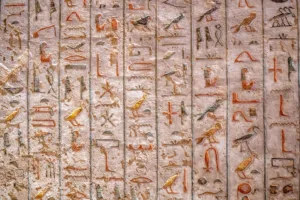
Contemporaneous with Mesopotamia, ancient Egypt flourished along the banks of the Nile River. The Egyptian civilization produced remarkable achievements in architecture, writing, and governance.
The Pyramids and Beyond
The construction of the pyramids stands as a testament to the Egyptians’ organizational skills and architectural innovation. These monumental structures served as tombs for pharaohs, reflecting the society’s beliefs in the afterlife and the divine nature of leadership. The unification of Upper and Lower Egypt under Narmer set the stage for centralized governance and a cultural legacy that would endure for millennia.
The Indus Valley Civilization
While Mesopotamia and Egypt dominated early historical narratives, the Indus Valley Civilization (IVC) represents another cornerstone. Emerging around 2500 BCE in present-day Pakistan and northwest India, the IVC showcased advanced urban planning, standardized weights and measures, and sophisticated drainage systems.
Decline and Legacy
Despite its decline around 1900 BCE, the IVC’s influence persisted through its trade networks, cultural exchanges, and social organization. The remnants of its cities, such as Harappa and Mohenjo-Daro, continue to intrigue historians and archaeologists.
Classical Antiquity
The Rise of Empires
As civilizations advanced, the establishment of empires began to shape the geopolitical landscape.
The Persian Empire
Founded by Cyrus the Great in the mid-6th century BCE, the Persian Empire became one of history’s largest empires, spanning three continents. The empire’s administrative efficiency and respect for local customs allowed it to manage a diverse populace. The creation of the Royal Road facilitated trade and communication, connecting distant regions.
The Greek City-States
Simultaneously, the emergence of Greek city-states such as Athens and Sparta fostered democratic ideals, philosophical inquiry, and cultural achievements. The Peloponnesian War, while devastating, highlighted the tensions between democracy and oligarchy, shaping political thought.
The Roman Empire
The Roman Empire, which followed in the footsteps of earlier empires, established one of the most enduring legacies in history. Its unparalleled infrastructure, legal system, and integration of diverse cultures created a unifying force in the Mediterranean. The Pax Romana facilitated trade and cultural exchanges, while innovations in engineering and governance set standards for future civilizations.
The Birth of Major Religions
Judaism, Christianity, and Islam
The development of major world religions during this period significantly influenced society, culture, and morality. Judaism, with its covenantal relationship with God, laid the groundwork for subsequent monotheistic faiths. Christianity, emerging from Jewish traditions, promoted notions of compassion, forgiveness, and salvation, profoundly impacting Western society.
Islam, founded by the Prophet Muhammad in the 7th century CE, rapidly spread across the Middle East and beyond, introducing a unique cultural and legal framework that shaped the evolving social landscape of Africa, Europe, and Asia.
The Middle Ages
The Feudal System
The collapse of the Western Roman Empire initiated the Medieval period, characterized by feudalism. This decentralized political system structured society around land ownership and loyalty, impacting social hierarchies and governance.
The Role of the Church
The Catholic Church emerged as a dominant force, influencing not only spiritual life but also political affairs. The church’s ability to unify diverse groups under a common faith played a crucial role in shaping medieval European identities.
The Rise of Kingdoms
England and the Magna Carta
The signing of the Magna Carta in 1215 marked a turning point in the relationship between rulers and their subjects, establishing the principle that everyone, including the king, was subject to the law. This document laid foundational ideas for constitutional governance and human rights that would reemerge in the modern era.
The Hundred Years’ War
The Hundred Years’ War between England and France (1337-1453) showcased the rise of nationalism and the evolution of military strategy. The conflict fostered a sense of identity and loyalty among populations, setting the stage for the emergence of modern nation-states.
The Renaissance and Enlightenment
The Cultural Reawakening
The Renaissance, beginning in the 14th century, rekindled interest in classical knowledge, resulting in advances in art, science, and philosophy. Figures such as Leonardo da Vinci and Michelangelo not only transformed artistic expression but also influenced societal views on individuality and human potential.
The Age of Enlightenment
The Enlightenment, emerging in the 17th and 18th centuries, championed reason, skepticism of authority, and the belief in progress. Philosophers such as John Locke and Voltaire advocated for natural rights and the social contract, inspiring revolutionary thought across the globe.
Revolutionary Movements
The American Revolution
The American Revolution (1775-1783) represented a significant challenge to colonial rule, emphasizing the principles of liberty, equality, and self-governance. The resultant Declaration of Independence articulated Enlightenment ideals, laying the groundwork for democratic governance.
The French Revolution
The French Revolution (1789) epitomized the clash between monarchy and popular sovereignty. The rise of revolutionary fervor led to the establishment of the First French Republic and the radical shift in power dynamics. The principles of “liberté, égalité, fraternité” became rallying cries for democratic movements worldwide.
The Haitian Revolution
Emerging as the first successful slave revolt, the Haitian Revolution (1791-1804) dismantled colonial rule and established Haiti as the first independent black republic. This event challenged racial hierarchies and inspired other liberation movements across the Americas and beyond.
The Rise of Nation-States
The Unification of Germany and Italy
The unification of Germany and Italy in the 19th century marked significant developments in the concept of national identity. Otto von Bismarck’s Realpolitik facilitated German consolidation through wars and alliances, while figures like Giuseppe Garibaldi and Count Cavour played crucial roles in Italy’s unification.
The Impact of Imperialism
The late 19th and early 20th centuries witnessed the zenith of European imperialism, as nations expanded their empires across Africa, Asia, and the Americas. The scramble for Africa and the colonization of vast territories reshaped global economic and political dynamics.
The World Wars
World War I
World War I (1914-1918) wrought profound changes in political landscapes, leading to the dismantling of empires and the redrawing of national borders. The Treaty of Versailles set the stage for future conflicts by imposing punitive measures on Germany.
World War II
World War II (1939-1945) served as a catalyst for global transformation, leading to the emergence of the United States and the Soviet Union as superpowers. The war resulted in the establishment of the United Nations, aiming to foster international cooperation and prevent future conflicts.
The Cold War Era
The Division of the World
The Cold War (1947-1991) defined much of the latter 20th century, characterized by ideological conflict between capitalism and communism. The division of Europe exemplified in the Berlin Wall symbolized the tensions that permeated global affairs.
Decolonization
The post-war period saw a wave of decolonization as countries in Africa, Asia, and the Caribbean sought independence from colonial powers. This movement reshaped international relations and led to the emergence of new nation-states, each navigating the challenges of nation-building and identity.
Contemporary Developments
Globalization
The late 20th and early 21st centuries have witnessed rapid globalization, intertwining cultures, economies, and political systems. Advances in technology and communication have facilitated the movement of ideas, goods, and people on an unprecedented scale.
Challenges and Opportunities
The complexities of contemporary global issues, such as climate change, migration, and pandemics, require collective action and cooperation among nations. The rise of multinational organizations and the push for sustainable development reflect the interconnectedness of modern challenges.
Conclusion
The journey from ancient civilizations to modern nations is marked by transformative events that shaped human history. Through innovations, revolutions, and the pursuit of identity, humanity continues to evolve. Understanding these key milestones fosters a deeper appreciation for the complexities of contemporary society, encouraging us to engage with the ongoing narrative of our shared human experience.
References
For this article, a host of sources would typically be mentioned using modern footnote styles referring to academic books, peer-reviewed journals, and credible internet sources that enrich the context presented above. These would include works on history, political science, anthropology, and sociology. Specific source references, such as works by historians like Yuval Noah Harari, Eric Hobsbawm, and others that explore these periods and events, can provide readers with further insights and deeper understanding.








Add Comment