












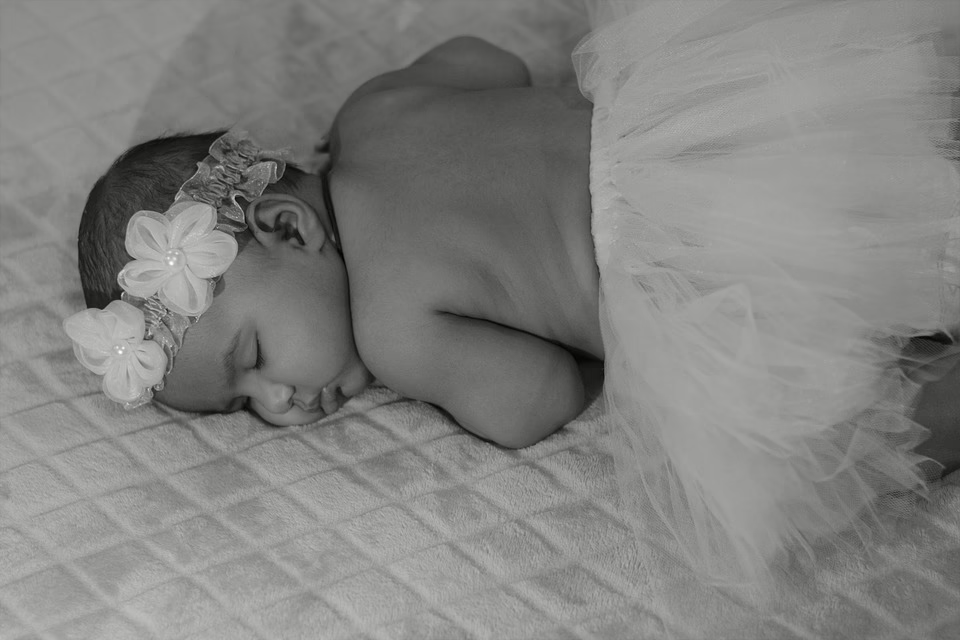

Awakening a Classic: The Enduring Legacy of Sleeping Beauty
The Timeless Tale: An Overview of Sleeping Beauty’s Story
Sleeping Beauty, a tale that has transcended generations, captivates audiences with its blend of romance, magic, and moral lessons. Originating from European folklore, the story has been adapted in various forms, including Charles Perrault’s 1697 version and the Brothers Grimm’s 1812 retelling titled “Little Briar Rose.” At its core, the tale follows Princess Aurora, cursed by the malevolent fairy Maleficent to fall into a deep sleep on her sixteenth birthday, only to be awakened by true love’s kiss. This narrative has endured, reflecting society’s changing values and the perpetual appeal of fairy tales that encapsulate the human experience.
The story’s archetypal elements—good versus evil, the curse, and the power of love—resonate on multiple levels. Critics and scholars have analyzed how these themes mirror societal attitudes toward gender roles, relationships, and destiny. Why has Sleeping Beauty remained relevant in various cultural contexts? The answer lies in its ability to evolve while maintaining its core essence. This blend of tradition and adaptability has ensured the tale’s place in modern folklore and its exploration through various mediums, including films, novels, and stage adaptations. Each rendition adds layers to the foundational narrative, enriching the character motivations and themes presented.
From fairy tale origins to Disney’s 1959 animated adaptation, the narrative has undergone significant transformations that reflect changing societal norms. While the original versions of the tale often included darker themes, such as violence and inevitable fate, the Disney portrayal emphasized beauty, love, and the transformative power of redemption. This shift not only redefined the story but also influenced the portrayal of female characters in popular culture. In this way, Sleeping Beauty has become a lens through which to examine broader cultural values, particularly the evolution of female agency and the implications of true love.
Footnotes:
- The significance of folkloric adaptations and their impact on cultural norms has been widely discussed in literary critiques.
- Disney’s interpretations often pivot the narrative towards more constructive themes, impacting societal expectations of gender roles.
The Cultural Impact of Sleeping Beauty: From Folklore to Film
The cultural impact of Sleeping Beauty extends beyond its narrative arc; it serves as a powerful vehicle for expressing societal values and artistic interpretation. The tale has been adapted into various forms, such as ballet, opera, and theatre, making it a staple of Western culture. One of the most iconic adaptations is Disney’s animated film, which introduced the story to a broader audience and solidified its place in popular culture. Disney’s “Sleeping Beauty” is renowned for its enchanting animation, memorable score, and increased emphasis on the romance between Aurora and Prince Phillip.
Since its release, Disney’s Sleeping Beauty has been celebrated for its artistic achievements, and it has sparked countless interpretations and retellings. Critics have praised the character designs, particularly the iconic Maleficent, signaling a shift in how villainous characters are portrayed and understood. This focus on character depth has encouraged audiences to consider the motivations behind characters’ actions, opening discussions about morality and inner conflict. The cultural dialogue surrounding these characters has perpetuated the narrative, allowing it to evolve in contemporary discussions about heroism and villainy.
Moreover, the film sparked a resurgence in interest in fairy tales and paved the way for further animated adaptations by Disney that drew from classic literature. Additionally, the cultural zeitgeist surrounding Sleeping Beauty has been echoed in various media, from literature to fashion, indicating the story’s ability to inspire and transcend its original medium. Through merchandise, merchandise collaborations, and theme park attractions, Sleeping Beauty has become synonymous with a certain aesthetic, one that continues to evoke nostalgia while influencing current trends in entertainment and popular culture.
In an age where classics are often reimagined, the enduring legacy of Sleeping Beauty suggests that the original themes of love, life, and fate remain relevant. As audiences wrestle with issues of identity and agency, the enchanting world of Sleeping Beauty continues to offer a template for understanding complex human emotions and relationships.
Footnotes:
- Disney’s adaptations have fundamentally altered the perception of traditional tales, influencing how subsequent generations interpret and engage with folklore.
- The merchandising of classic fairy tales has transformed their accessibility and cultural significance.
Modern Interpretations: Reimaginings and Retellings of Sleeping Beauty
As societal values shift, so do narratives, leading to an array of modern interpretations and retellings of Sleeping Beauty. Some adaptations stay true to the classic story, while others take liberties to explore new themes, character complexities, and divergent perspectives. The themes of agency, empowerment, and inner strength resonate today, prompting authors, filmmakers, and artists to reimagine Aurora’s tale through unconventional lenses.
One notable contemporary adaptation is the film “Maleficent,” which reinterprets the classic story from the perspective of the notorious villain. By focusing on Maleficent’s character development, the film challenges the archetypal “evil fairy” trope, presenting a narrative of betrayal, loss, and ultimately, redemption. This shift not only redefines the character of Maleficent but also prompts audiences to question the validity of traditional narratives, encouraging a more nuanced understanding of “good” and “evil.”
Literature has also seen a surge of reimaginings, offering new layers to familiar characters. Young adult fiction has particularly embraced this trend, with novels that delve into the psychological and emotional aspects of Aurora’s character. These retellings often feature strong, autonomous female protagonists, empowering readers, especially young girls, to understand that personal agency is more powerful than fate. By exploring themes like friendship and self-discovery, these modern adaptations resonate with contemporary audiences.
In addition to film and literature, the tale’s adaptation in theater and dance showcases its versatility. Ballet adaptations, for instance, have highlighted the story’s emotional depth, bringing a new audience to the classic tale through the power of movement and expression. Furthermore, musical adaptations often experiment with musical styles, reinterpreting the narrative through song and performance art.
Ultimately, the various interpretations of Sleeping Beauty highlight the timeless nature of the story while ensuring that its legacy continues to evolve. As these adaptations challenge traditional portrayals, they also cultivate discussions about the power of narratives to shape culture and identity, reaffirming the enduring relevance of Sleeping Beauty in the modern world.
Footnotes:
- The re-examination of villainous characters in fairy tales illustrates a broader societal inclination towards more complex character arcs.
- The focus on female empowerment in literature has paved the way for female protagonists to thrive outside of traditional gender roles.
Feminist Readings: Agency and Autonomy in Sleeping Beauty
In analyzing the Sleeping Beauty narrative, feminist readings offer insightful critiques and discussions around the themes of female agency and autonomy. Traditional interpretations often cast Aurora as a passive character, whose destiny relies on external forces—in this case, the prince’s arrival to awaken her from her cursed slumber. However, feminist scholars argue that such portrayals ignore the complexities and potential for agency within the female experience.
Through a feminist lens, Sleeping Beauty can be perceived as a cautionary tale about the dangers of passivity and the societal expectations placed upon women. The earliest versions of the story show how Aurora’s life is dictated by the actions of others and how her worth is ultimately tied to physical beauty and romantic love. This perspective has prompted contemporary readers and viewers to question the implications of love as a defining characteristic in a woman’s life and the narrative’s emphasis on the need for a male savior.
Modern interpretations of Sleeping Beauty often correct these perceived flaws by infusing the narrative with a stronger sense of self in the female protagonist. These adaptations explore Aurora’s identity, dreams, and aspirations beyond her role as a princess or romantic interest. By emphasizing personal agency, these reimaginings encourage a broader conversation around the value of women expressing their desires and taking control of their destinies.
Moreover, the emergence of stories focusing on the female villain—like Maleficent—further expands discussions on women’s roles in fairy tales. By humanizing the antagonist and exploring her motivations, these retellings highlight themes of betrayal, love lost, and the complexity of female relationships. This shift allows for a richer examination of conflict and resolution, ultimately contributing to a more nuanced understanding of femininity.
Feminist readings of Sleeping Beauty continue to inspire discussions around relationships, autonomy, and societal expectations placed on women. As the narrative evolves, it fosters a new generation of narratives that celebrate female agency, paving the way for stories that resonate with modern audiences and reflect the complexities of the female experience.
Footnotes:
- The exploration of female agency in classic fairy tales has become increasingly relevant in contemporary analysis and discourse.
- The reinterpretation of traditional roles allows for broader engagement with complex narratives centered around women’s experiences.
The Symbolism of Sleep: Understanding the Themes of Awakening and Rebirth
One of the most fascinating aspects of Sleeping Beauty is the rich symbolism surrounding the themes of sleep, awakening, and rebirth. The prolonged slumber of Aurora invites interpretations ranging from the psychological to the spiritual. Sleep, in this context, becomes a metaphor for potential—representing dreams, the unconscious, and the passage of time. The awakening from sleep signals not only liberation from curses or restraints but also personal growth and transformation.
In literature and art, sleep has often been associated with transition—a place where consciousness shifts and new realms of existence are navigated. Aurora’s deep sleep can be seen as both a literal and metaphorical state, where she transcends the mundane to enter a world of dreams filled with possibilities. This idea resonates deeply with human experiences of aspiration and the journey toward self-actualization.
As Aurora awakens to true love’s kiss, the act symbolizes a broader awakening often intertwined with themes of empowerment and self-discovery. True love in the narrative extends beyond romantic involvement; it serves as a catalyst for exploring identity and emotional depth. By awakening her, the prince does not merely fulfill a prophecy but aids in Aurora’s journey toward self-acceptance and agency.
The theme of rebirth further ties into the narrative, signifying renewal and the cyclical nature of life. This concept posits that through challenges and periods of dormancy, individuals ultimately emerge transformed. The idea of awakening from slumber can parallel the realization of personal strength, as well as the acceptance of one’s complexities and vulnerabilities.
Ultimately, the motifs of sleep, awakening, and rebirth in Sleeping Beauty contribute to the story’s enduring legacy. They evoke deeply human experiences and sentiments that transcend temporality, offering layers of meaning to audiences young and old. These themes inspire reflections on personal growth and the journey toward self-discovery amidst life’s challenges and uncertainties.
Footnotes:
- The exploration of sleep as a metaphor for transformation enhances the narrative depth of Sleeping Beauty.
- Themes of awakening are universally resonant, celebrating journeys of personal growth and empowerment.
The Artistic Legacy of Sleeping Beauty: From Ballet to Grand Adaptations
The artistic legacy of Sleeping Beauty is encapsulated in its numerous adaptations across diverse art forms, from ballet to theater and modern retellings. One of the most notable renditions is the ballet “Sleeping Beauty,” composed by Pyotr Ilyich Tchaikovsky in 1889. This celebrated ballet remains a hallmark in the world of dance, famous for its stunning choreography and masterful score, bringing new life to the classic tale.
Tchaikovsky’s ballet adaptation infuses the story with an emotional depth that aligns perfectly with the themes of love and transformation. The music captures the essence of each character and moment, allowing audiences to experience the narrative through the fluid expressions of dance. The character of Aurora is depicted not just as a beautiful princess but as a multifaceted figure, evoking compassion and empathy throughout her journey.
The ballet has inspired generations of dancers and choreographers, who reimagine the story through their choreography and artistic vision. Each production emphasizes new themes, interpretations, and storytelling techniques while preserving the tale’s essence. The enduring popularity of the ballet indicates its profound impact on arts and culture, ensuring that the legacy of Sleeping Beauty continues to evolve.
In addition to ballet, theatrical adaptations and performances further enrich the narrative’s cultural significance. These productions often highlight different elements of the story, offering diverse interpretations that speak to modern audiences. For instance, theatrical retellings may focus on moral dilemmas, the complexity of love, or the power of friendship, providing a platform for discussions around relevant themes within the context of contemporary society.
Artistic collaborations and adaptations have allowed Sleeping Beauty to remain a vital part of cultural dialogues. These interpretations not only showcase the transformative power of storytelling but also demonstrate how timeless narratives can generate new access points for audiences across generations. The continued exploration of Sleeping Beauty in various media exemplifies its ability to inspire creativity and dialogue, asserting its place as a cornerstone in the annals of artistic achievement.
Footnotes:
- Tchaikovsky’s ballet not only showcases the story’s emotional depth but also expands its reach to audiences unfamiliar with the fairy tale.
- The adaptability of Sleeping Beauty highlights the story’s universal themes, prompting reflections on love and transformation across various art forms.
Reception and Critique: Navigating Controversies and Celebrations
The reception of Sleeping Beauty, particularly in its Disney iteration, has sparked considerable debate among critics and audiences alike. While many celebrate the film’s artistic achievement and nostalgic charm, others raise concerns regarding its implications for gender roles, agency, and female representation. Critics have scrutinized the portrayal of Aurora as a passive character, whose fate is determined by a male savior’s kiss. This narrative arc poses questions about the implications of romantic love as a transformative force and the need for active agency among female characters.
Furthermore, discussions around cultural representation and inclusion have been amplified in recent years. Critics argue that while the tale has traversed cultures, it often reflects Eurocentric ideals and values, limited in its portrayal of diverse identities. This has prompted calls for reimaginings that offer a more inclusive perspective, addressing the underrepresentation of women and individuals from diverse backgrounds in both classic and contemporary adaptations.
In navigating these controversies, many modern adaptations have sought to address the critiques leveled against the original tale. By emphasizing female agency, character complexity, and the exploration of identity, these retellings pave the way for more nuanced discussions and promote a broader understanding of love beyond traditional tropes. They invite audiences to engage critically with narrative elements, challenging stereotypes and expanding the realm of possibilities in storytelling.
The conversation surrounding Sleeping Beauty serves as an important reminder of the power of storytelling in shaping societal narratives. As audiences continuously reinterpret the tale, its legacy becomes a site for fruitful discussion around norms, values, and the potential for narratives to enact change. By acknowledging both the criticisms and celebrations of this classic tale, we can cultivate a more inclusive understanding of its place in contemporary culture.
Footnotes:
- The discussions around gender representation in Sleeping Beauty reflect broader conversations about female autonomy in popular media.
- Inclusion in storytelling is essential for reflecting diverse experiences and fostering empathy among audiences.
Conclusion: The Future of Sleeping Beauty and Its Legacy
As we consider the enduring legacy of Sleeping Beauty, it is evident that this classic tale continues to resonate with audiences across generations. From its folkloric roots to its modern adaptations, the narrative has evolved to explore themes of love, agency, and identity, engaging with contemporary societal issues and resonating with diverse audiences. The various interpretations and reimaginings of the story allow for continued dialogue about gender representation, character agency, and the complexities of human relationships.
The future of Sleeping Beauty is likely to remain vibrant, as storytellers embrace the story’s adaptability and seek to redefine its implications further. With every new retelling, audiences are presented with opportunities to engage with the narrative in fresh ways, enriching our understanding of both classic and contemporary themes. This continuous evolution ensures that Sleeping Beauty maintains its relevance in a world that is increasingly appreciative of multilayered narratives that embrace diversity.
Moreover, as societal norms and values shift, the enduring legacy of Sleeping Beauty serves as a reminder of the power of storytelling to influence cultural perceptions. Whether through film, literature, fashion, or dance, the tale’s magic appeals to universal human experiences, making it a vital part of our collective cultural heritage. As long as stories are told, Sleeping Beauty will continue to awaken new dreams and inspire fresh interpretations, solidifying its place in the tapestry of storytelling for generations to come.
Footnotes:
- The evolution of classic tales signifies their capacity to engage with contemporary audiences and reflect changing norms and values.
- The adaptability of narratives like Sleeping Beauty ensures their continued relevance and impact in popular culture.
This article provides an in-depth exploration of the enduring legacy of “Sleeping Beauty,” focusing on its themes, critiques, and adaptations throughout the years, while intertwining broader cultural dialogues surrounding the narrative. If you have more requests or need further elaboration on any section, feel free to ask!








Add Comment