















Planetary Perception: Which Celestial Bodies Are Shining Tonight?
Introduction to Celestial Bodies and Their Visibility
In the realm of astronomy, the night sky is filled with a variety of celestial bodies, each contributing to our understanding of the universe and enhancing the beauty of our nighttime landscape. The planets of our solar system, alongside stars, moons, and other astronomical phenomena, create a canvas that captures the fascination of both amateur stargazers and professional astronomers alike. This article aims to explore which celestial bodies are visible on a given night, focusing on the planets in our solar system. Understanding planetary visibility involves considering their positions relative to Earth, their phases if applicable, and various observable factors like light pollution and local weather conditions. We will also delve into the cultural significance of these celestial bodies, especially how they have inspired mythologies and influenced navigation over centuries. Thus, let us embark on this celestial exploration tonight, revealing which planets might be shining brightly in our skies.
The Dance of the Planets: Orbital Mechanics and Visibility
The visibility of planets in the night sky is determined by their positions in relation to Earth and the Sun. Each planet follows an elliptical orbit, and their distance from our planet changes nightly. For example, Mercury and Venus, being the closest planets to the Sun, are often visible shortly after sunset or before sunrise, as they never stray far from the Sun’s glare. On the other hand, the outer planets like Mars, Jupiter, and Saturn tend to be observed at different times of the year, depending on their positions in their respective orbits. Seasonal astronomy also plays a substantial role in visibility; certain planets can become more prominent during specific months based on observable patterns.
To effectively gauge which planets may be shining on any given night, astronomers and enthusiasts utilize various tools, such as star charts and mobile applications designed specifically for stargazing. These tools provide information on the position of planets, their brightness, and even the best time for viewing. It’s worth noting that other factors—such as atmospheric conditions, light pollution, and geographic location—significantly impact the visibility of celestial bodies. Therefore, enthusiasts should also check local weather forecasts and consider natural dark-sky areas where light pollution is minimized.
Observing The Inner Planets: Mercury and Venus
Mercury: The Elusive Messenger
Mercury, known as the planet closest to the Sun, holds a unique charm for sky-watchers. Because of its proximity to the Sun, Mercury is difficult to observe. Typically, it can be seen either in the morning or evening twilight, making it a brief but stunning sight. Often appearing as a bright star-like object, Mercury’s visibility can be fleeting, especially during certain times of the year when it graces us with its presence. To better observe Mercury, stargazers should look to the western horizon just after sunset or to the eastern horizon just before dawn, allowing for optimal viewing conditions in the absence of solar glare[1].
Venus: The Morning Star and Evening Star
Venus, known as both the Morning Star and the Evening Star due to its bright and prominent presence in the sky during dawn and dusk, is another inner planet that captivates observers. It shines with a brilliance that can outshine all other celestial bodies except the Moon. Venus exhibits phases similar to the Moon, which can be observed through telescopes or even binoculars, adding layers to its allure. When on display, Venus offers a dazzling sight that varies from a crescent to a fully illuminated disk, depending on its position relative to the Sun and Earth. For those wishing to view Venus, checking its rise and set times will enhance the stargazing experience, allowing for a spectacular evening or morning sight[2].
Observing The Outer Planets: Mars, Jupiter, and Saturn
Mars: The Red Planet
Mars, often dubbed the Red Planet, has fascinated humans for centuries with its distinctive reddish hue. Its visibility varies, but when Mars is in opposition—a condition when Earth is directly between Mars and the Sun—it shines exceptionally brightly, making it one of the most prominent objects in the night sky. Observing Mars provides an opportunity to explore features such as its polar ice caps and surface conditions when equipped with a telescope. For those observing Mars tonight, it is essential to check if the planet is near opposition, as this significantly enhances its visibility and detail observed through telescopes[3].
Jupiter: The Gas Giant
Jupiter, the largest planet in our solar system, is a remarkable sight for anyone looking up at the night sky. Its sheer size and brightness make it easily visible without any optical aid—the planet often shines with a steady brightness, unlike nearby stars that may twinkle due to atmospheric interference. Observing Jupiter also comes with the thrilling chance to see its four largest moons—Io, Europa, Ganymede, and Callisto—collectively known as the Galilean moons. These moons can often be observed in a straight line on either side of the planet through small telescopes or binoculars. For those interested in viewing Jupiter tonight, it’s advisable to find a location with minimal light pollution, as this enhances the clarity of both the planet and its moons[4].
Saturn: The Ringed Beauty
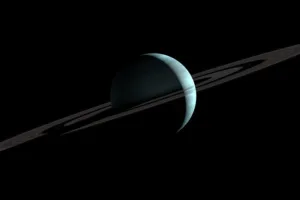
Saturn, the second-largest planet in our solar system, is renowned for its stunning rings, making it one of the cosmic wonders. Saturn’s rings can be seen even through small telescopes, creating a spectacle that leaves many stargazers in awe. The planet often appears golden or yellowish in color, which is captivating enough to draw attention from both casual observers and avid astronomers. To maximize chances of observing Saturn, stargazers should check seasonal cycles, as the tilt of Saturn’s rings can change. It’s particularly important to note the best time to view Saturn, as its position in the sky can vary throughout the year[5].
In-depth Exploration of Gas Giants: Uranus and Neptune
Uranus: The Ice Giant
Uranus, an ice giant with a peculiar rotational tilt, is less frequently observed compared to its fellow outer planets. However, when it is visible, it often appears as a faint bluish dot in the night sky. The planet can be more challenging to locate due to its dim brightness, often requiring a telescope to view adequately. Observers typically utilize star charts or mobile apps to help navigate their way to this distant planet. Uranus’ uniquely tilted axis can create an unusual experience, leading it through extreme seasonal variations in brightness and visibility. Astute astronomers may choose to explore Uranus when it is in opposition, as this is when visibility reaches its peak[6].
Neptune: The Distant Blue World
Neptune, the farthest planet from the Sun, is characterized by its deep blue color, which is a result of atmospheric methane. Viewing Neptune can be a rewarding experience, albeit a challenging one due to its faintness. Nonetheless, skilled observers can spot Neptune as a small blue dot in the sky with the help of telescopes. Best observed during clear nights and away from city lights, Neptune’s visibility can also be enhanced during opposition, which occurs approximately every 365 days. Learning about Neptune’s unique position and brightest visibility times can greatly enhance the experience for curious astronomers who wish to catch a glimpse of this distant world[7].
Cultural Significance and Historical Context
The visibility of planets does not only capture the interest of scientists; it has deep cultural significance, too. Historically, wandering stars—what the ancients referred to as planets—were crucial in navigation, agriculture, and religious practices. Ancient civilizations such as the Babylonians, Greeks, and Maya meticulously tracked planetary positions, allowing them to develop sophisticated calendars and astrological systems. For instance, the alignment of celestial bodies was often interpreted as omens or significant events foretold in myths.
Today, understanding which planets are visible carries ongoing relevance. Astrology, for many people, continues to draw on celestial bodies to interpret human affairs and natural phenomena. The increasing interest in stargazing and planet observation also fosters a sense of connection to our cosmos, encouraging individuals to look beyond themselves—consciously or unconsciously recalling ancient traditions that honored the rhythm of the night sky and its celestial influences[8].
Conclusion: The Celestial Show Tonight
Tonight’s celestial display holds the promise of revealing potential sights of vibrant planets that adorn our night sky. Whether it is the brilliant shine of Venus at twilight, the compelling red of Mars, the enormous presence of Jupiter, or the elegant rings of Saturn, each planet offers a unique experience for those inclined to look up and discover the cosmos. To observe these celestial wonders, consider local conditions, optimal times, and the available tools at your disposal. As you take this moment to appreciate the majesty of our solar system, you not only indulge in the beauty of astronomy but also participate in a long, storied tradition of exploration and wonder that connects humanity through time and space.
In closing, let this observation be a source of inspiration and joy—one that kindles a deeper passion for the infinite universe above us. As we ponder on the planetary perception tonight, may our curiosity be sparked, and our gaze remain fixed upward, ever in search of the celestial magic that awaits among the stars.
[1]: The visibility of Mercury is greatly influenced by its orbital position relative to Earth and the Sun. [2]: Venus’ changing phases offer a captivating view that varies throughout the month, with its brilliant brightness making it easily likable for stargazers. [3]: The phenomenon of Mars in opposition is an exciting event for astronomers, presenting the perfect opportunity for spectacular observations. [4]: Jupiter’s impressive features, including its prominent moons, create an enriching stargazing experience that can be enjoyed by enthusiasts of all ages. [5]: Saturn’s rings are a remarkable feature that can be observed even by amateurs using basic telescopes, providing a glimpse into the beauty of planetary systems. [6]: Uranus’ extraordinary tilt and seasonal changes contribute to its fascinating characteristics, making it a delightful target for curious observers. [7]: As Neptune’s visibility is often limited, understanding its seasonal patterns can greatly enhance the stargazing experience for those who seek a glimpse of this distant planet. [8]: The deep-rooted historical significance of planetary observation continues to resonate in cultural practices and modern astronomy, reminding us of our lifelong fascination with the universe.






Add Comment