

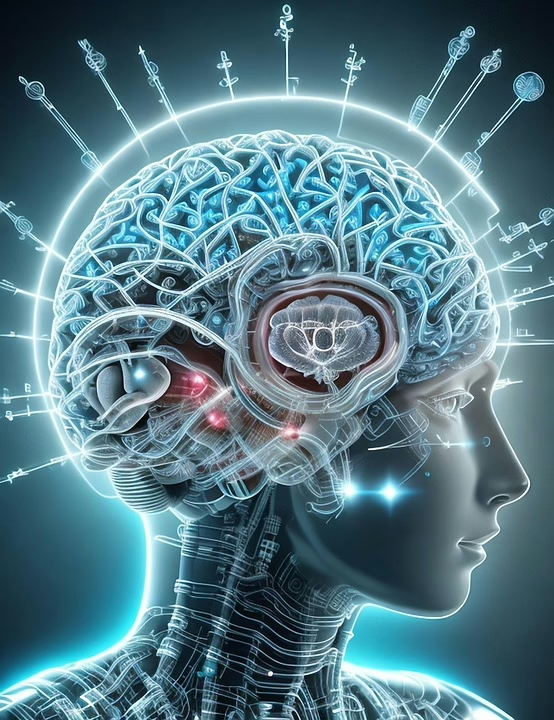

AI and the Creative Process: Collaborations Between Artists and Machines
The convergence of artificial intelligence (AI) and creativity has sparked exhilarating debates and groundbreaking collaborations across various artistic fields. From music and visual arts to literature and fashion, AI’s involvement in the creative process is reshaping our understanding of artistry, agency, and authorship. This article delves into the nuances of how AI collaborates with human artists, fostering innovation while posing philosophical questions about the essence of creativity.
The Intersection of Art and Technology
Traditionally, art has been viewed as a profoundly human endeavor, steeped in emotional depth, cultural context, and individual experience. However, as technological advancements progress, the boundaries of artistic creation have begun to blur. AI, particularly in forms like machine learning, offers unprecedented capabilities in generating art.
Historical Context
The relationship between art and technology is not new. The invention of photography in the 19th century challenged the conventions of painting, prompting artists like Manet and Monet to explore impressionism, abstraction, and other avant-garde movements. Similarly, AI represents a modern technological evolution, prompting contemporary artists to reassess the nature of creativity.
The Role of AI in the Creative Process
AI systems operate by analyzing vast datasets to find patterns and generate new content based on those patterns. This capability allows AI to assist artists across various mediums in ways that were previously unimaginable.
Visual Arts: Algorithmic Aesthetics
Artists like Refik Anadol and Mario Klingemann are at the forefront of using AI to create installations that engage viewers in unique multi-sensory experiences. Anadol’s work, for instance, employs algorithmically generated visualizations based on data collected from the environment, transforming it into immersive, dynamic art.
Case Study: The Next Rembrandt
In 2016, a team of technologists and art historians created “The Next Rembrandt,” a 3D-printed painting generated by an AI system trained on the artist’s existing works. The project successfully captured the essence of Rembrandt’s style, prompting discussions about whether the resulting piece can be classified as “art.” This project exemplifies how AI can synthesize historical influences, creating something entirely new while acknowledging the past.
Music: Composing with AI
AI’s transformative effect is also apparent in music composition. Systems like OpenAI’s MuseNet and Google’s Magenta are capable of composing original pieces across various genres. These tools analyze existing music to understand different styles and structures, allowing them to generate new compositions that blend these influences.
Case Study: AIVA (Artificial Intelligence Virtual Artist)
AIVA is an AI composer that creates original soundtracks for films and games. It operates by learning from a database of classical music and contemporary works, producing compositions that reflect different styles. Musicians increasingly collaborate with AIVA, using its generated pieces as a foundation for further creative exploration.
Collaborative Creativity: The Artist and the Machine
While some fear that AI might replace human creativity, many artists embrace the technology as a collaborative partner. This partnership enables artists to push boundaries, explore new forms of expression, and challenge traditional notions of authorship.
Expanding the Creative Toolbox
AI serves as an advanced tool, allowing artists to explore new dimensions of their work. By automating repetitive tasks or generating new ideas, AI enables artists to focus on the aspects of their work that require human intuition.
Example: Generative Design in Fashion
In fashion, designers use AI tools to create unique patterns and textile designs. Companies like Adidas employ generative design systems that suggest innovative patterns based on user input and existing design trends. This approach accelerates the design process, allowing brands to keep pace in a rapidly evolving industry.
The Ethics of Collaboration
The question of authorship becomes increasingly complex when machines are involved in the creative process. If an AI generates a piece of art, who owns the copyright? How do we attribute the creative process—solely to the artist, the AI, or both?
Current copyright laws are ill-equipped to handle these new dynamics, raising ethical concerns about artists’ rights and the implications of AI in creative fields. As more artists embrace AI, the conversation surrounding intellectual property and ethical standards will continue to evolve.
The Philosophical Implications of AI Artistry
As we embrace AI as a creative partner, it is essential to consider the philosophical implications of this collaboration. Can machines truly create? What does it mean to be an artist in the age of AI? These questions point to broader existential considerations about the nature of creativity.
Defining Creativity
To understand the impact of AI on creativity, we must first define what creativity means. Traditionally, creativity has been associated with originality, emotional depth, and human experience. Yet, if AI-generated art can provoke emotion or stimulate thought, should we not reevaluate our definitions?
AI-generated art has prompted audiences to confront their preconceptions about creativity. People often react emotionally to AI-generated artworks or music, suggesting that the impact of art transcends the artist’s identity. This perspective invites a more inclusive understanding of creativity that embraces both human and machine contributions.
Emotional Resonance and Authenticity
One of the primary critiques of AI-generated art is its perceived lack of authenticity. Critics argue that without a human soul, AI cannot understand or express emotions, challenging the emotional foundations of the art. However, supporters argue that AI amplifies the creative process, allowing artists to explore emotions that might not have been accessible without the technology.
Example: The Song “Daddy’s Car”
In 2016, a song titled “Daddy’s Car” was created using AI algorithms trained on the music of The Beatles. The song mimics the iconic style of the legendary band, sparking debate about the authenticity of AI-generated music and the essence of artistic genuineness. While some criticized it as lacking emotional depth, others celebrated the innovative fusion of human creativity and machine learning.
The Future of AI and Creativity
As we look to the future, it is essential to consider the trajectory of AI’s role in the creative landscape. The integration of AI in artistic practices promises to continue flourishing, driven by advancements in machine learning and data analysis.
Democratizing Art and Creativity
AI’s accessibility has the potential to democratize the art world. With user-friendly tools that allow anyone to experiment with AI-generated art, the barriers to entry in artistic fields are lowered. This trend could lead to a more diverse range of voices in the creative community, reflecting a broader array of cultural influences and perspectives.
New Aesthetics and Movements
The collaboration between artists and AI will likely give rise to new aesthetics and movements that challenge existing norms. As artists incorporate AI into their practices, we may witness the emergence of styles that fuse human creativity with machine learning in unprecedented ways. This evolution could also influence galleries, exhibitions, and the broader cultural landscape.
The Role of Education
Incorporating AI into educational curricula is crucial for developing the next generation of creative thinkers. By teaching students how to work with AI tools and explore their implications, educators can prepare them for an increasingly integrated artistic landscape. This education should encompass not only technical skills but also ethical considerations, helping students navigate the complexities of authorship and collaboration with AI.
Conclusion
The collaboration between artists and machines heralds a new era in creativity, filled with potential and challenges. As we continue to explore this intersection, it is imperative to remain open to the possibilities that AI brings while critically engaging with the ethical, philosophical, and emotional dimensions of artistic creation. For now, the conversation surrounding AI and the creative process is just beginning—a vibrant dialogue that promises to shape the future of art itself.
References
-
McCormack, J., Gifford, T., & Hutchings, P. (2019). “An Analysis of the Current State of AI in Art.” Journal of Cultural Science.
-
Elgammal, A., Liu, B., Elhoseiny, M., & Mazzone, M. (2017). “Can: Creative Adversarial Networks, Generating” Art by Learning About Styles and Deviating from Style.” arXiv preprint arXiv:1706.07068.
-
Collins, T. (2020). “The Ethics of AI Art.” AI & Society.
-
Ranjan, P., & Ghosh, A. (2022). “AI and the Future of Creativity: Exploring Collaborations.” International Journal of Arts and Sciences.
-
Trapani, S., & Vicari, A. (2020). “The Future of the Art Market: Blockchain, AI, and the New Collaborations.” Art Market Research.
-
Gunkel, D. J. (2018). “The Machine and the Artist: Reflections on the Role of AI in Creative Practice.” Journal of Aesthetic Education.
By exploring these themes deeper, artists and technologists can foster a richer dialogue that continues to advance the creative practices of tomorrow.





Add Comment