













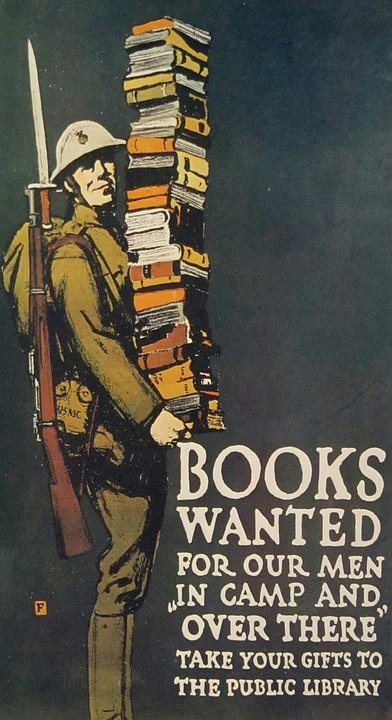

Unearthing the Past: Top 10 War History Books That Redefine Our Understanding
War has shaped human history in profound ways. The study of war is not just about battles fought or strategies devised; it’s also about the complex human experience that unfolds in the face of conflict. Books on war history often provide unique perspectives, unveiling nuances that traditional narratives might overlook. In this article, we’ll explore ten exceptional war history books that effectively redefine our understanding of warfare, its impact on societies, and the human condition itself.
1. “The Guns of August” by Barbara W. Tuchman
A Pivotal Narrative of World War I’s Outset
Barbara W. Tuchman’s “The Guns of August” is a seminal text that chronicles the first month of World War I, focusing on the decisions made by leaders that led to catastrophic outcomes. Tuchman masterfully weaves together political intrigue, military strategy, and human behavior, illustrating how miscalculations and the rigidity of European powers sealed their fates. Her narrative style, peppered with vivid characters and dramatic events, captures the reader’s imagination, making it accessible while remaining deeply informative. The book received the Pulitzer Prize for History in 1963 and continues to be a cornerstone in the study of military history. Hence, it’s essential for anyone interested in the intricacies of early 20th-century conflicts and their long-lasting effects on modern geopolitics[1].
2. “On Killing: The Psychological Cost of Learning to Kill in War and Society” by Dave Grossman
Exploring the Psychology Behind Warfare
In “On Killing,” Dave Grossman delves into the psychological implications of combat on soldiers, arguing that killing is not an instinctive act but rather a learned behavior. Grossman draws from psychological studies, historical accounts, and interviews with veterans to examine the emotional toll of war. His exploration of the “killology” concept sheds light on why many soldiers struggle to take lives despite being trained for it. This work redefines our understanding of the soldier’s mindset and challenges the glorification of combat. By discussing post-traumatic stress disorder and other psychological scars, Grossman emphasizes the need for better mental health support for veterans, pressing us to reconsider the narrative around bravery in war[2].
3. “With the Old Breed: At Peleliu and Okinawa” by Eugene B. Sledge
A Marine’s Harrowing Experience in the Pacific Theater
Eugene B. Sledge’s memoir, “With the Old Breed,” stands out for its raw and honest depiction of the brutality of war. Sledge recounts his experiences as a Marine during the Pacific campaigns of World War II, particularly the battles of Peleliu and Okinawa. His vivid descriptions and unflinching honesty present the horrors of combat while also revealing the deep bonds formed among soldiers facing unimaginable challenges. The book provides a personal glimpse into the psychological effects of war, making it essential for understanding the human element in military history. Sledge’s ability to capture both the violence and the camaraderie among troops re-frames our understanding of soldiering and the cost of conflict on individual lives[3].
4. “A Bright Shining Lie: John Paul Vann and America in Vietnam” by Neil Sheehan
Unpacking the Complexity of the Vietnam War
Neil Sheehan’s “A Bright Shining Lie” is an exhaustive investigation into the Vietnam War through the lens of John Paul Vann, a flawed yet insightful figure. The book dissects the political and military failures of the United States while providing a thorough examination of the Vietnamese perspective. Sheehan’s narrative combines biographical elements with broader historical analysis, ultimately demonstrating how the war was mired in miscommunication and misconceptions. By presenting a multi-faceted view of the conflict, Sheehan revolutionizes the understanding of the Vietnam War, emphasizing the tragic human cost and the consequences of misjudged policies. This work not only critiques American military strategy but also addresses the moral complexities faced by soldiers, civilians, and policymakers[4].
5. “The Second World War” by Sir Winston S. Churchill
The First-Person Account of a Leader During War
In “The Second World War,” Sir Winston S. Churchill offers an expansive view of WWII from his unique vantage point as Prime Minister of the United Kingdom. The six-volume series combines personal insights with global events and strategies undertaken during the war. Churchill’s eloquence and sharp analysis provide readers with an understanding of the psychological atmosphere of the era, making it a vital resource not just for understanding military strategies but also public sentiment. This series has become a defining work on the history of World War II, showcasing how leaders can influence the course of history through decisions that seemed right at the time but had lasting ramifications. Churchill’s reflections push readers to ponder the delicate balance between courage and strategy in warfare, emphasizing the weight of leadership in times of crisis[5].
6. “The Art of War” by Sun Tzu
Ancient Strategies with Timeless Relevance
Sun Tzu’s “The Art of War” transcends its ancient origins to provide enduring insights into strategy, tactics, and conflict management. Written in the 5th century BC, this classic text emphasizes the importance of intelligence, adaptability, and understanding one’s enemy. Its principles have been applied not only in military contexts but also in business, sports, and personal development, underscoring its relevance across centuries. The philosophical undertones invite readers to reflect on the nature of conflict and the human psyche, offering a holistic view of warfare. By integrating concepts of strategy with ethical considerations, Sun Tzu’s work remains a foundational text in the study of war, encouraging critical thinking about the motivations and consequences of combat[6].
7. “War Is a Force That Gives Us Meaning” by Chris Hedges
Examining the Societal Fascination with War
Chris Hedges explores the paradox of war’s allure and destructiveness in “War Is a Force That Gives Us Meaning.” Through personal anecdotes and historical analysis, Hedges argues that war creates a narrative that fulfills fundamental human needs for purpose and identity. However, he also exposes the dark realities and moral implications of such a mindset. By discussing how societies romanticize war while ignoring its brutal consequences, Hedges compels readers to confront uncomfortable truths about the human condition. This work is essential for understanding the socio-cultural aspects of warfare and the psychological mechanisms that drive societies to engage in conflict, ultimately challenging the glorification of battle as a means of achieving meaning in life[7].
8. “The Things They Carried” by Tim O’Brien
A Fictional Lens on the Vietnam War Experience
Tim O’Brien’s “The Things They Carried” blurs the lines between fiction and memoir, offering a poignant examination of the Vietnam War through the eyes of soldiers. By focusing on the physical and emotional burdens carried by soldiers, O’Brien dives deep into the complexities of memory, trauma, and storytelling. Each story in the collection adds layers to our understanding of the battlefield experience, highlighting how personal narratives can illuminate broader historical themes. O’Brien’s ability to convey the psychological weight of war challenges readers to grapple with the lasting impacts of conflict, making it crucial for understanding the Vietnam War’s legacy and the nature of soldiering itself[8].
9. “The Face of Battle” by John Keegan
A Revolutionary Examination of Combat
In “The Face of Battle,” John Keegan departs from traditional military history by focusing on the experiences of the common soldier rather than the strategies of commanders. By analyzing three pivotal battles—Agincourt, Waterloo, and the Somme—Keegan offers a fresh perspective on what it means to fight in war. He delves into the sensory experiences of combat, providing a visceral understanding of the chaos and brutality faced by soldiers. This shift in focus allows readers to appreciate the human elements that often get lost in strategic overviews. Keegan’s work redefines military history by emphasizing the realities of warfare over glorified accounts, inviting readers to empathize with those who fight on the frontlines[9].
10. “Postwar: A History of Europe Since 1945” by Tony Judt
A Comprehensive Overview of Modern European History
Tony Judt’s “Postwar” is a sweeping history that examines the social, political, and economic transformations in Europe over the last several decades, focusing on the ramifications of World War II. Judt analyzes how the war shaped the continent’s future through the lens of various nations and their unique experiences. His narrative combines meticulous research with engaging prose to explore themes of memory, identity, and reconciliation in the postwar era. By bridging the past and present, Judt invites readers to reflect on the long-lasting impacts of war and the dynamics that continue to shape Europe. This comprehensive work not only redefines our understanding of postwar Europe but also highlights the intricate relationships between history and the contemporary world[10].
Conclusion
These ten war history books challenge conventional narratives, offering multifaceted perspectives on conflict, human experience, and the legacy of warfare. Through comprehensive research, personal narratives, and psychological insights, these authors illuminate the complexities of military history, urging us to question and redefine our understanding of war and its impacts on society. As we delve into these texts, we can appreciate not only the strategies employed in battles but also the profound human costs that accompany them—essential lessons that remain relevant in today’s world.
Footnotes
- Tuchman, Barbara W. The Guns of August. New York: Crown Publishing, 1962.
- Grossman, Dave. On Killing: The Psychological Cost of Learning to Kill in War and Society. New York: Little, Brown and Company, 1995.
- Sledge, Eugene B. With the Old Breed: At Peleliu and Okinawa. New York: Random House, 1981.
- Sheehan, Neil. A Bright Shining Lie: John Paul Vann and America in Vietnam. New York: Random House, 1988.
- Churchill, Winston S. The Second World War. Houghton Mifflin, 1948-1954.
- Sunzi. The Art of War. Translated by Lionel Giles. New York: Dover Publications, 1993.
- Hedges, Chris. War Is a Force That Gives Us Meaning. New York: PublicAffairs, 2002.
- O’Brien, Tim. The Things They Carried. New York: Houghton Mifflin Harcourt, 1990.
- Keegan, John. The Face of Battle. New York: Penguin Books, 1976.
- Judt, Tony. Postwar: A History of Europe Since 1945. New York: Penguin Press, 2005.






Add Comment